Physical activity
All forms of movement can have a positive impact on your health. Moderate exercise can provide major health benefits, both physically and mentally. Some of the benefits of physical activity are that it reduces the risk of various physical and mental illnesses and the risk of bone fractures. In addition, it reduces stress and anxiety and improves your sleep and ability to concentrate. It is never too late to start moving!
Physical activity is defined, in purely physiological terms, as any bodily movement that increases energy expenditure beyond the energy expenditure we have at rest. It can be anything from gardening to organised physical exercise. Physical activity can take place with low to high exertion.
Recommendations
If you are 18 years or older, you are recommended to be physically active for a total of at least 150 minutes per week at moderate intensity. Moderate intensity means that you move in a way that makes you warm and increases your heart rate and breathing. What counts as moderate intensity is individual and changes depending on how active you are. For someone who has been physically inactive for a longer period, a slow walk may be enough. Whereas for a well-trained person it may be necessary for you to jog. For a person with a disability and, for example, who uses a wheelchair, it is important to know that all movement counts.
If you exercise at high intensity, you need to be active for 75 minutes per week. High intensity means an even more noticeable increase in heart rate and breathing.
Tips for physical activity
- Go for a brisk walk for 30 minutes five days a week.
- Go running for 20 to 30 minutes three days a week.
- Combine the first two points.
- Do activities that strengthen the muscles twice a week: take the stairs, do sit-ups, do press-ups.
- Balance training for those over 65: dance, exercise classes, walk in the woods on uneven ground, stand on one leg for a while every day.
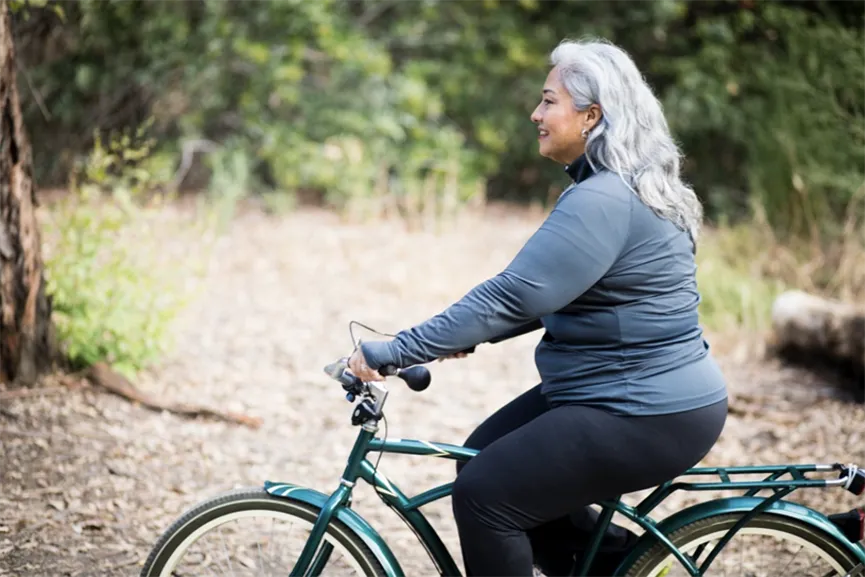
Remember: All kinds of exercise count, even what you get through everyday activities such as cycling, taking the stairs, picking mushrooms and cleaning!
Self-monitoring for physical activity
If you are monitored for Physical activity, you will record your physical activity in a mobile app. In the mobile app, you can choose what type of activity you have done: Everyday exercise, Cardio, Muscle strength or Balance. You also choose whether the activity was of moderate or high intensity and how many minutes you exercised. The readings you record in the app are also sent to your healthcare provider. You and your healthcare provider can both see how the readings have been over time through graphs and tables, and keep track of whether you have achieved your goal.
Check whether you can get access to remote patient monitoring here.