Type 1 diabetes
Insulin is a hormone needed for cells to be able to absorb sugar from the blood. In type 1 diabetes, the body has stopped producing insulin, which contributes to too much sugar in the blood and blood sugar becomes too high. Type 1 diabetes is a condition you have for life and most often develops in childhood or adolescence, but sometimes also in adulthood. Type 1 diabetes can cause complications that occur quickly, but also complications and secondary conditions that arise later in life. Many complications can be detected early and addressed.
P-glucose is a blood test most often taken via a finger prick and shows the sugar level in the blood at the time of sampling. With a blood test that measures HbA1c, the doctor can also see what your average blood sugar has been over the past two to three months, which is sometimes referred to as a long-term blood sugar test.
Symptoms
Untreated type 1 diabetes can cause symptoms such as increased thirst, frequent urination, tiredness and lack of energy, nausea, stomach pain, visual disturbances, unintentional weight loss, or an acetone smell on the breath.
Cause
Type 1 diabetes is an autoimmune disease. This means that the immune system has started attacking the body’s own tissues. The cause is not fully known, but it is likely that you develop type 1 diabetes through infection with certain viruses. The disease is also considered to be partly hereditary.
Treatment
Treatment for type 1 diabetes consists of monitoring blood sugar levels and taking insulin. Blood sugar level is the measure that indicates how much sugar you have in your blood. Insulin helps the cells absorb the sugar that is in the blood.
Source: 1177
Self-monitoring for type 1 diabetes
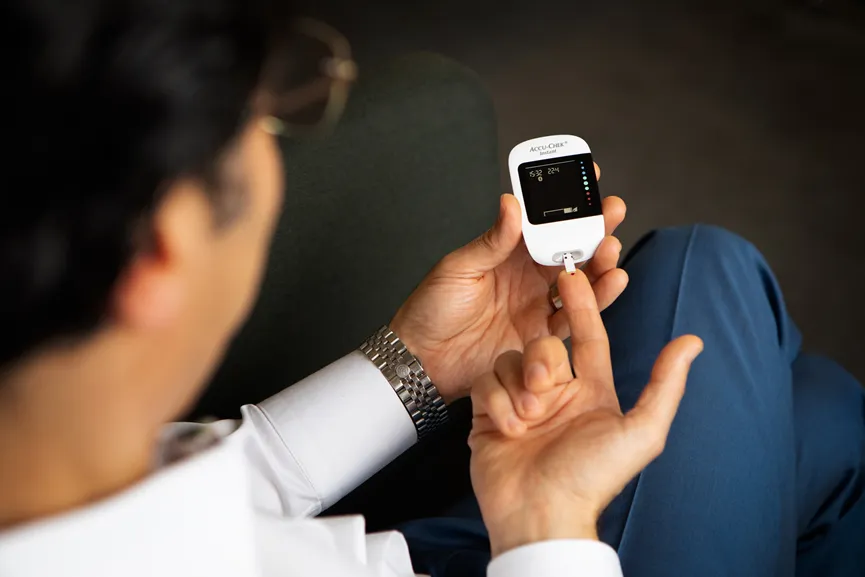
Remote patient monitoring can be used for type 1 diabetes. Through self-monitoring you can measure your blood sugar when and where it suits you.
You will have access to a Bluetooth-connected blood glucose meter that you pair with a mobile app. When you measure your blood sugar, the values are automatically entered into the app. There you can track the values over time through graphs and tables. If your blood sugar is abnormal, i.e. too high or too low in relation to set threshold values, your healthcare provider receives a notification about this and can contact you regarding any actions.
By detecting blood sugar levels that are too high or too low in time and addressing them, the risk of both rapid and long-term complications is reduced.
Do you have type 1 diabetes? Check whether you can get access to remote patient monitoring here.