
Gestational diabetes
Insulin is a hormone needed for the cells to be able to absorb sugar from the blood. During pregnancy, the body's cells become less sensitive to insulin, and the body is also often larger than before. More insulin is therefore needed to achieve the same effect as previously, and sometimes the body is unable to produce this on its own. Blood sugar levels then rise and the woman may develop gestational diabetes, which can have consequences such as effects on the foetus's development and growth, an increased risk of pre-eclampsia and delivery complications, and low blood sugar for the baby. After delivery, blood sugar levels usually return to normal, but there is an increased risk that the woman will develop type 2 diabetes later in life.
To receive a diagnosis of gestational diabetes, a blood test called P-glucose is usually taken via a finger prick at your midwife's. The test shows your blood sugar level at the time of sampling and is measured in mmol/litre. If your blood sugar level is too high, you will also be asked to provide a venous blood sample while fasting, and in some cases also undergo a so-called glucose tolerance test.
Symptoms
An elevated blood sugar level often causes mild symptoms that may not even be noticed, but with very high blood sugar levels you may experience symptoms such as fatigue, increased thirst and frequent urination.
Cause
Gestational diabetes can be partly hereditary. There is also an increased risk for those who have had gestational diabetes before, are overweight, or have previously given birth to a baby assessed to be large in relation to the length of the pregnancy.
Treatment
Which treatment you receive depends on how high your blood sugar level is. Often it is enough to eat food that contains less sugar, eat regularly and spread meals evenly throughout the day, and to be physically active. Sometimes you may need medication to lower your blood sugar.
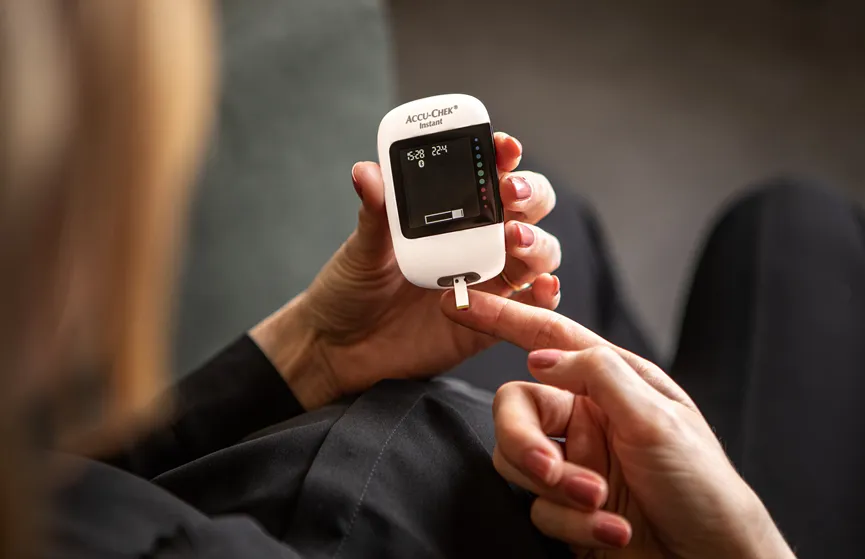
When an elevated blood sugar level has been detected, the midwife needs to keep an eye on things so that the woman does not develop gestational diabetes. Normally, the woman needs to write down the values herself on a piece of paper to bring to the next scheduled midwife appointment, or alternatively report them by phone, for manual analysis. Through remote patient monitoring, which takes place at home between the scheduled visits, you can use a Bluetooth-connected blood glucose meter that pairs with an app. This means your blood sugar readings are entered automatically into the app and analysed immediately. It removes responsibility from the woman and also reduces the risks associated with both human error and the time factor, since the midwife can act immediately in the event of any deviation.
Self-monitoring can be offered to women with elevated blood sugar and thus a risk of developing gestational diabetes, as well as to pregnant women with confirmed gestational diabetes.
Source: 1177, Swedish Diabetes Association and ImagineCare/Hedda Hela Livet.
Are you pregnant with elevated blood sugar or gestational diabetes? Check whether you can get access to remote patient monitoring here.
Being pregnant can be a vulnerable situation. Self-monitoring gives us a chance to see and act for all our women immediately; it becomes an important piece of the puzzle for safe, patient-centred maternity care. Digital technology is a given for today's pregnant women, which provides very good conditions.